2026-04-08
5 Invasive Plants Destroying Richmond Properties (And How to Get Rid of Them)
Identify the worst invasive species taking over yards and wooded lots in Richmond, VA. Learn why they spread so fast and the most effective removal methods.
If you own wooded property in the Richmond metro area, chances are at least one of these invasive species has already taken hold. Left unchecked, they choke out native trees, tank property values, and turn usable land into an impenetrable wall of vegetation. Here are the five worst offenders in Central Virginia and what actually works to get rid of them.
1. Bradford Pear (Callery Pear)
You know those white-flowering trees that line every suburban street in Henrico and Chesterfield? They're an ecological disaster. Bradford pears were planted as ornamentals for decades, but they cross-pollinate with other Callery pear varieties and produce thorny, fast-spreading offspring that colonize fence lines, fields, and forest edges.
Why it's a problem: Bradford pear thickets create dense, thorny stands that are nearly impossible to walk through. Their shallow root systems crowd out native hardwoods, and the thorns can puncture tractor tires.
What works: Forestry mulching grinds Bradford pears into mulch in a single pass without disturbing the soil. The mulch layer suppresses regrowth. For scattered trees, cut-stump treatment with herbicide prevents re-sprouting.
2. Tree of Heaven (Ailanthus altissima)
Tree of heaven earned its nickname "the tree from hell" honestly. Originally from China, it spreads through an aggressive root system that can send up new shoots 50 feet from the parent tree. Cut one down and you might get a dozen new sprouts within weeks.
Why it's a problem: It releases toxins into the soil that kill competing plants (allelopathy), grows up to 6 feet per year, and its root system can crack foundations and damage sewer lines. It's especially common along I-95 corridors and abandoned lots in the Richmond area.
What works: Cutting alone makes tree of heaven worse. The most effective approach is hack-and-squirt herbicide treatment on larger trunks combined with mulching of the surrounding colony. This kills the connected root network so it cannot re-sprout.
3. English Ivy
English ivy looks harmless climbing up a brick wall, but when it escapes into your woods, it smothers everything. It climbs mature trees, blocks their sunlight, adds wind load that brings them down in storms, and creates a dense ground mat that prevents any native seedlings from establishing.
Why it's a problem: English ivy can kill a mature oak tree in 5 to 10 years by blocking photosynthesis and adding enough weight to snap branches. In Henrico and Hanover's wooded neighborhoods, it is the single most common invasive taking over residential lots.
What works: For ground-level ivy, forestry mulching clears it efficiently along with any brush it has intertwined with. For ivy climbing trees, cut the vines at the base ("life-saving cut") and let the upper portion die naturally. Do not pull ivy off tree bark as it can damage the tree.
4. Kudzu
The "vine that ate the South" barely needs an introduction. Kudzu grows up to a foot per day in summer, smothering trees, structures, and anything else in its path. Drive along any highway in Chesterfield County and you will see entire tree lines draped in kudzu.
Why it's a problem: Kudzu fixes nitrogen in the soil, which sounds helpful until you realize it changes soil chemistry and favors its own growth over native species. Its root crowns can weigh over 300 pounds, making manual removal nearly impossible.
What works: Mulching the above-ground growth is the fast first step, but kudzu's massive root system requires follow-up herbicide treatment at the crown. Expect a multi-season commitment for complete eradication on heavily infested properties.
5. Honeysuckle (Japanese Bush Honeysuckle)
Japanese honeysuckle is everywhere in Richmond. It smells great in June and that's about the only nice thing about it. Bush honeysuckle forms dense stands in forest understories that shade out all native plants, and the vine form strangles young trees.
Why it's a problem: Honeysuckle leafs out earlier than native plants and holds its leaves longer, giving it a competitive advantage in every season. Birds spread the berries widely, so even cleared areas get re-invaded from neighboring properties. In New Kent and Hanover County's rural areas, honeysuckle is often the dominant understory plant.
What works: Forestry mulching handles bush honeysuckle stands effectively. The mulcher grinds the entire plant, root crown and all, in a single pass. For vine honeysuckle climbing trees, cut at the base and treat the stump. Late fall treatment is most effective because the plant is still transporting nutrients to its roots.
The bottom line
All five of these invasive species share something in common: the longer you wait, the worse and more expensive the problem gets. A half-acre of honeysuckle this year becomes two acres next year. A few Bradford pear seedlings along your fence line become an impenetrable thicket in three seasons.
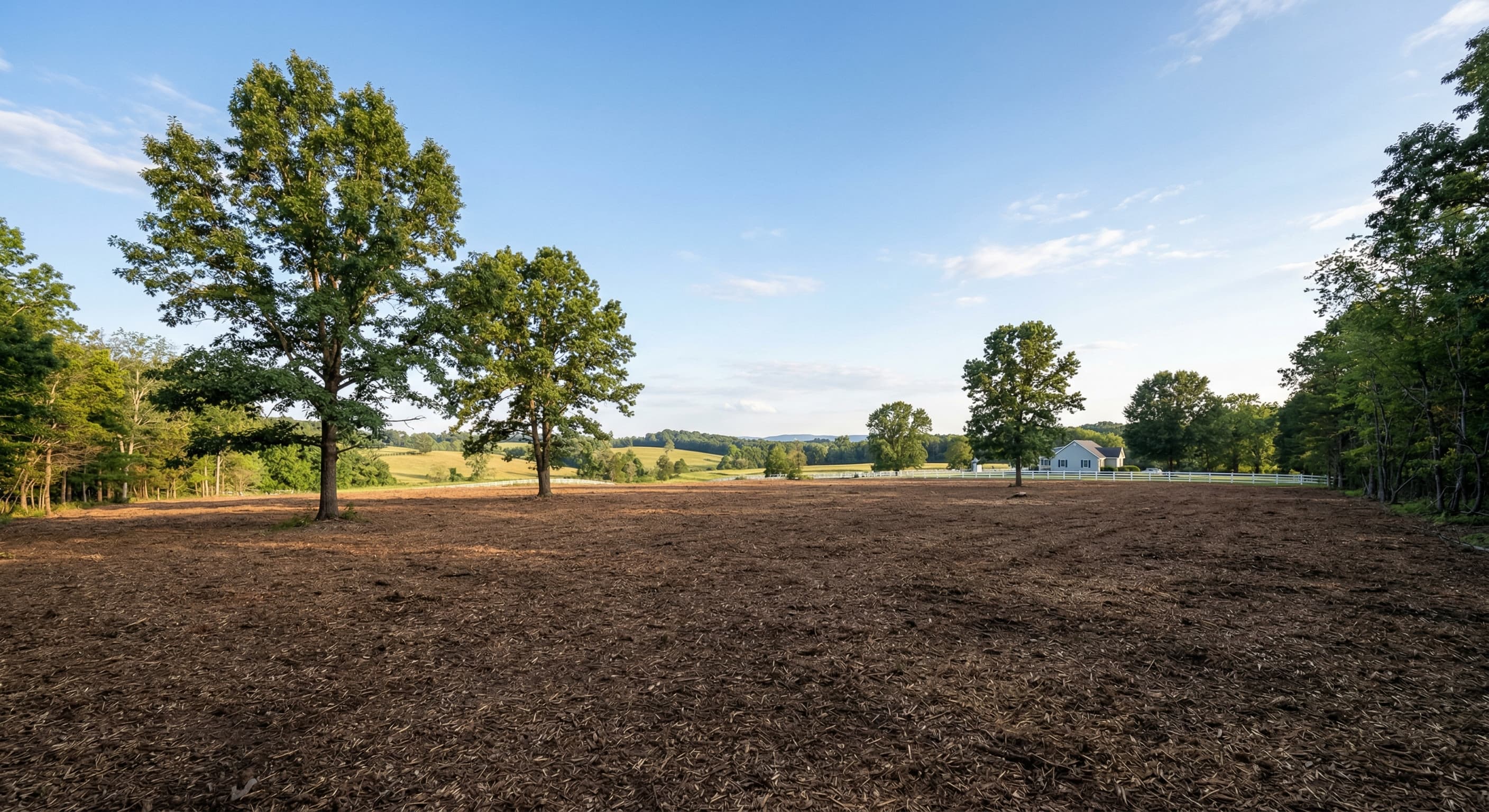
Forestry mulching is the fastest way to reclaim invaded property in Richmond because it handles dense vegetation in a single pass without the mess of burning, chipping, or hauling debris. The mulch stays on your land as a natural ground cover that suppresses regrowth while you follow up with targeted treatment on the worst offenders.